
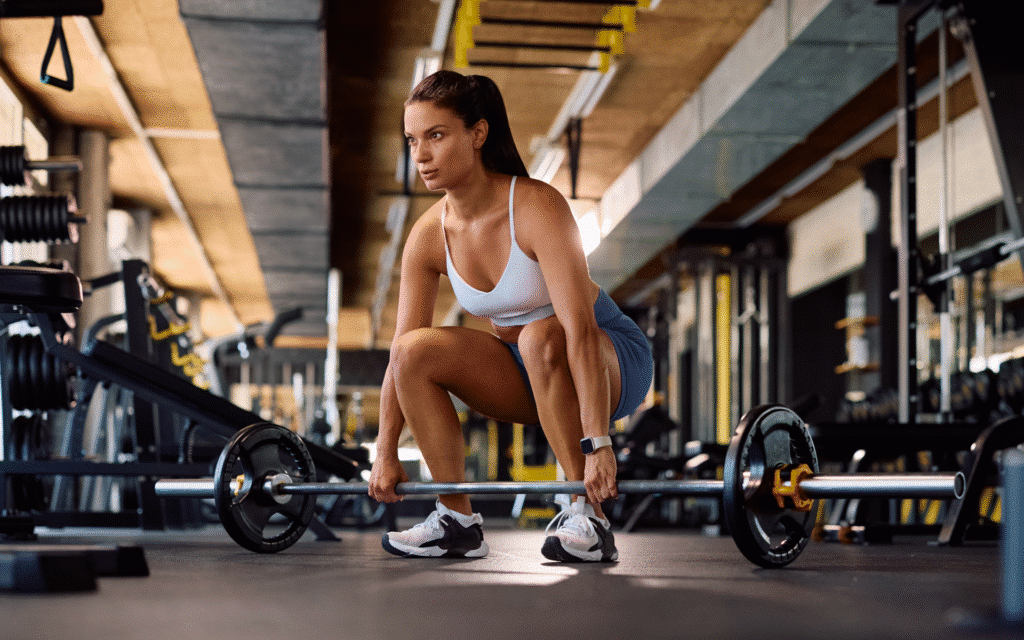

Achieving total-body fitness does not require spending hours navigating complex gymnasium equipment or attempting convoluted exercise routines. The most efficient approach to building strength, improving cardiovascular health, and enhancing functional mobility relies on compound movements. Compound exercises engage multiple joints and large muscle groups simultaneously, triggering significant metabolic demands while developing balanced physical capability.
Designing a workout routine around foundational movement patterns—pushing, pulling, hinging, squatting, carrying, and core stabilization—delivers maximal physical adaptation in minimal time. By prioritizing high-efficiency movements, you can construct a sustainable fitness regimen that translates directly to everyday vitality and athletic longevity.
The Science of Compound Movements Versus Isolation Drills
To understand why certain exercises yield superior results, it helps to examine how the body recruits muscle tissue during physical exertion. Exercises generally fall into two broad categories:
-
Compound Exercises: Movements that require multi-joint action and coordinate large muscle groups together (such as squats, deadlifts, and overhead presses).
-
Isolation Exercises: Single-joint movements designed to target a specific muscle group in relative isolation (such as bicep curls or leg extensions).
While isolation drills have their place in bodybuilding or localized injury rehabilitation, compound exercises form the engine of total-body fitness. Multi-joint exercises recruit a higher volume of muscle fibers, which increases overall caloric expenditure both during and after the workout. Furthermore, compound movements stimulate greater hormonal responses, promoting lean muscle growth and accelerated fat loss. From a practical standpoint, training multiple muscle groups together teaches your body to function as an integrated system rather than a collection of separate parts.
Foundational Strength Exercises for Maximum Efficiency
Integrating these multi-joint exercises into your routine guarantees comprehensive physical stimulus across every major muscle group in the body.
The Barbell or Bodyweight Squat
Often referred to as the king of lower-body exercises, the squat is an essential human movement pattern. It engages the quadriceps, hamstrings, gluteus maximus, and deep core stabilizers, while placing healthy mechanical stress on bone density.
Stand with your feet slightly wider than shoulder-width apart, with your toes turned outward five to ten degrees. Keep your chest elevated, brace your midsection, and initiate the movement by bending at your hips and knees simultaneously. Lower your body until your thighs are at least parallel to the floor, ensuring your knees track in line with your toes. Press firmly through your entire foot to return to the standing position.
The Conventional Deadlift
The deadlift is an unmatched posterior-chain movement that builds functional strength throughout the back, glutes, hamstrings, and grip. Because it involves lifting a stationary load from the ground, it trains your body to generate maximum force safely.
Stand with your feet hip-width apart under a loaded barbell, with the bar positioned over the middle of your feet. Hinge forward at your hips, bending your knees slightly to grip the bar just outside your legs. Flat your back, pull your shoulders down and back, and brace your core tightly. Drive through the floor with your legs to lift the bar, standing tall while squeezing your glutes at the top of the movement. Reverse the motion with controlled mechanics to return the weight to the floor.
The Standing Overhead Press
The overhead press develops upper-body pressing power, shoulder girdle stability, and core strength. Performing this exercise from a standing position forces your trunk and glutes to work continuously to keep your spine aligned.
Hold a barbell or pair of dumbbells at shoulder level with your palms facing forward. Stand tall with your feet shoulder-width apart and your glutes tightly contracted. Press the weight directly overhead in a straight line, fully extending your arms without arching your lower back. Lower the weight under control back to your upper chest.
The Pull-Up or Inverted Row
Upper-body pulling exercises are crucial for counteracting poor posture caused by prolonged sitting and screen use. The pull-up targets the latissimus dorsi, rhomboids, rear deltoids, and arm flexors while demanding high levels of core control.
Grasp a pull-up bar with an overhand grip slightly wider than shoulder-width. Hang with fully extended arms, engage your shoulder blades by pulling them down away from your ears, and pull your chest up toward the bar until your chin clears it. Lower yourself smoothly back to a full dead-hang position. For those working toward a full pull-up, inverted bodyweight rows using suspension trainers or a fixed barbell offer an accessible, scalable alternative.
The Push-Up and Parallel Bar Dip
The push-up remains one of the most versatile bodyweight exercises in existence. It strengthens the chest, anterior shoulders, and triceps while functioning as an active plank for core stability.
Place your hands on the floor slightly wider than shoulder-width, with your body forming a straight line from your head to your heels. Lower your chest toward the floor by bending your elbows at a 45-degree angle to your torso. Press forcefully through the palms to return to the top position without allowing your hips to sag or your lower back to arch. Parallel bar dips provide an advanced progression, increasing the load placed on the chest and triceps.
High-Output Conditioning and Loaded Carries
Building total-body fitness requires combining raw muscular strength with cardiovascular stamina and work capacity. Incorporating dynamic, functional conditioning drills optimizes energy systems and enhances real-world performance.
Kettlebell Swings
The kettlebell swing is a powerful ballistic movement that develops cardiovascular endurance while conditioning the glutes, hamstrings, and lower back.
Stand over a kettlebell with a wide stance. Hinge at your hips to reach down and grasp the handle with both hands. Hike the kettlebell back between your legs like a football, then explosively snap your hips forward to drive the bell upward to chest height. Allow the weight to float briefly before guiding it back down into the next hip hinge, maintaining a flat back throughout the set.
Loaded Farmer Carries
Carrying heavy loads over distance is one of the simplest yet most effective ways to build grip strength, core stability, shoulder girdle endurance, and mental toughness.
Pick up a pair of heavy dumbbells or kettlebells from the floor using proper deadlift mechanics. Stand tall with your shoulders pulled back and down, your chest lifted, and your core braced. Walk forward with short, deliberate steps for a set distance or time, resisting any urge to lean forward or sway from side to side.
The Burpee Complex
The burpee is a full-body conditioning movement that combines strength work with high-intensity cardiovascular conditioning. It requires zero equipment and can be adjusted to fit various fitness levels.
From a standing position, drop into a squat, place your hands on the floor, and kick your feet back into a push-up position. Perform a full push-up, jump your feet back under your hips, and explosively jump straight up into the air, reaching your hands overhead. Land softly and immediately transition into the next repetition.
Structuring a Total-Body Fitness Program
To achieve optimal results from these high-yield movements, structure your workouts to balance training stress with recovery.
-
Frequency: Train three days per week on non-consecutive days (such as Monday, Wednesday, and Friday), allowing your muscular and nervous systems adequate time to rebuild between sessions.
-
Movement Selection: Include one lower-body squat or hinge pattern, one upper-body push, one upper-body pull, and one core or carry exercise in every workout.
-
Progressive Overload: Gradually increase the difficulty over time by adding weight, increasing repetitions, improving movement range, or reducing rest intervals between sets.
-
Recovery: Prioritize high-quality sleep, consume adequate protein and hydration, and incorporate low-intensity recovery walks on non-training days.
Frequently Asked Questions
Can I achieve complete total-body fitness using only bodyweight exercises?
Yes, bodyweight training can build exceptional strength, endurance, and physical coordination. Exercises like push-ups, pull-ups, bodyweight squats, lunges, and plank variations effectively challenge all major muscle groups. As these movements become easier, you can maintain progress by adjusting tempos, altering leverage angles, or transitioning to single-leg and single-arm variations.
How many times a week should I perform total-body workouts?
For most individuals, performing full-body workouts three times a week on non-consecutive days provides the ideal balance between physical stimulus and recovery. This schedule allows you to hit every major muscle group with high frequency while giving your joints and nervous system 48 hours of rest between sessions.
Are compound exercises safe for people with a history of lower back pain?
Compound exercises can actually help prevent and manage lower back pain when executed with proper form and appropriate weight. Movements like squats and deadlifts strengthen the glutes, core, and back extensors that support the spine. However, individuals with active back injuries should consult a physical therapist and master bodyweight hinge patterns before adding heavy external loads.
Should I do cardio before or after my compound strength exercises?
It is generally best to perform heavy compound strength exercises at the beginning of your workout when your energy levels and central nervous system are fresh. Performing intense cardiovascular training prior to strength work induces physical fatigue, which can compromise your movement mechanics and reduce force output during complex lifts.
What is the difference between a hip hinge and a squat movement?
A squat is a knee-dominant movement pattern characterized by significant knee flexion and an upright torso, primary targeting the quadriceps. A hip hinge is a hip-dominant movement pattern where the hips move backward with minimal knee bend, keeping the shins mostly vertical to target the posterior chain (glutes and hamstrings).
How long should I rest between sets of heavy compound exercises?
For heavy compound lifts aimed at building maximal strength, rest two to three minutes between sets. This rest window allows your muscle cells to replenish adenosine triphosphate (ATP) reserves and lets your central nervous system recover, ensuring you can maintain high force output and proper form on subsequent sets.
How do I know if I am lifting heavy enough to build functional strength?
You are using an appropriate weight when the final two repetitions of a set feel challenging and cause your movement speed to slow down slightly, while still allowing you to maintain strict, flawless form. If you can complete all your target repetitions without experiencing physical effort, it is time to incrementally increase the load.

Comments are closed.